
How to Find Your Property Lines (and Why a Survey Still Matters)
One of the first things people want to do when they get to their land is find the corners. Where does my lot start, and where does it end?
There are a few ways to get a good idea. Only one of them is official. Here's how I'd go about it.
Start with a map
Before you ever drive out, get a map of the lot.
Our free property map. Every lot we sell comes with one. It shows the corner GPS coordinates, the length of each side and one tap driving directions. You can pull it up on your phone, walk toward a corner and get pretty close.
The county GIS map. Most counties have an online map that shows parcel lines. You look up the lot by its APN and the map shows you its shape.
Parcel apps. There are phone apps that show property lines over a satellite view, and they'll show your location as you walk.
All three of these are great for getting your bearings. But here's the thing. None of them are a survey. Our maps are made to the best of our ability, and county maps and apps can be off too. They can be close, and sometimes they're not as close as you'd hope.
Look for corner pins
When a lot has been surveyed in the past, the surveyor usually set markers at the corners. These are often metal rods or pipes driven into the ground, sometimes with a plastic cap on top. You'll hear people call them pins or irons.
If you get close to a corner on your map, look around. Sometimes they're sticking up out of the ground. Sometimes they're buried under leaves or dirt. A metal detector can help.
Finding a pin is a good sign. But don't assume it's the right one. Pins get moved, knocked over or set in the wrong spot. Only a surveyor can confirm a marker.
Don't trust the fence
A lot of people assume the fence is the property line. Sometimes it is. A lot of times it isn't.
Fences get built where it was easy to build them, or where someone guessed the line was. Over the years, nobody remembers why it's where it is. So treat a fence as a clue, not an answer.
Why a survey still matters
A survey is when a licensed surveyor comes out with professional equipment and finds the exact boundaries of your land. They can set stakes or pins at the corners and give you a drawing of the property.
It's the only way to know for sure where your lines are.
Here's when I'd say a survey really matters.
- Before you build. If your house, shop or septic system ends up in the wrong spot, you could break setback rules or build on your neighbor's land.
- Before you put up a fence. A fence in the wrong spot can cause a neighbor dispute that lasts for years.
- If something doesn't match. If the map, the pins and the neighbor's fence all tell different stories, a survey settles it.
- When you sell. A survey can make the land easier to sell later.
I highly recommend getting one, and it's a great first thing to spend money on once the lot is yours. I wrote more about it in Surveys and Title Companies.
Survey costs vary depending on the size of the lot, the area and how much work it takes. Call a couple of local surveyors and get quotes.
A few tips for walking your land
- Download your map before you go. Cell signal can be spotty out in the country.
- Bring water, good boots and a friend.
- Walk the lines slowly and take notes or photos of anything you find.
- Be respectful of neighbors. If you're not sure if you're on your land, you might not be.
A good place to practice
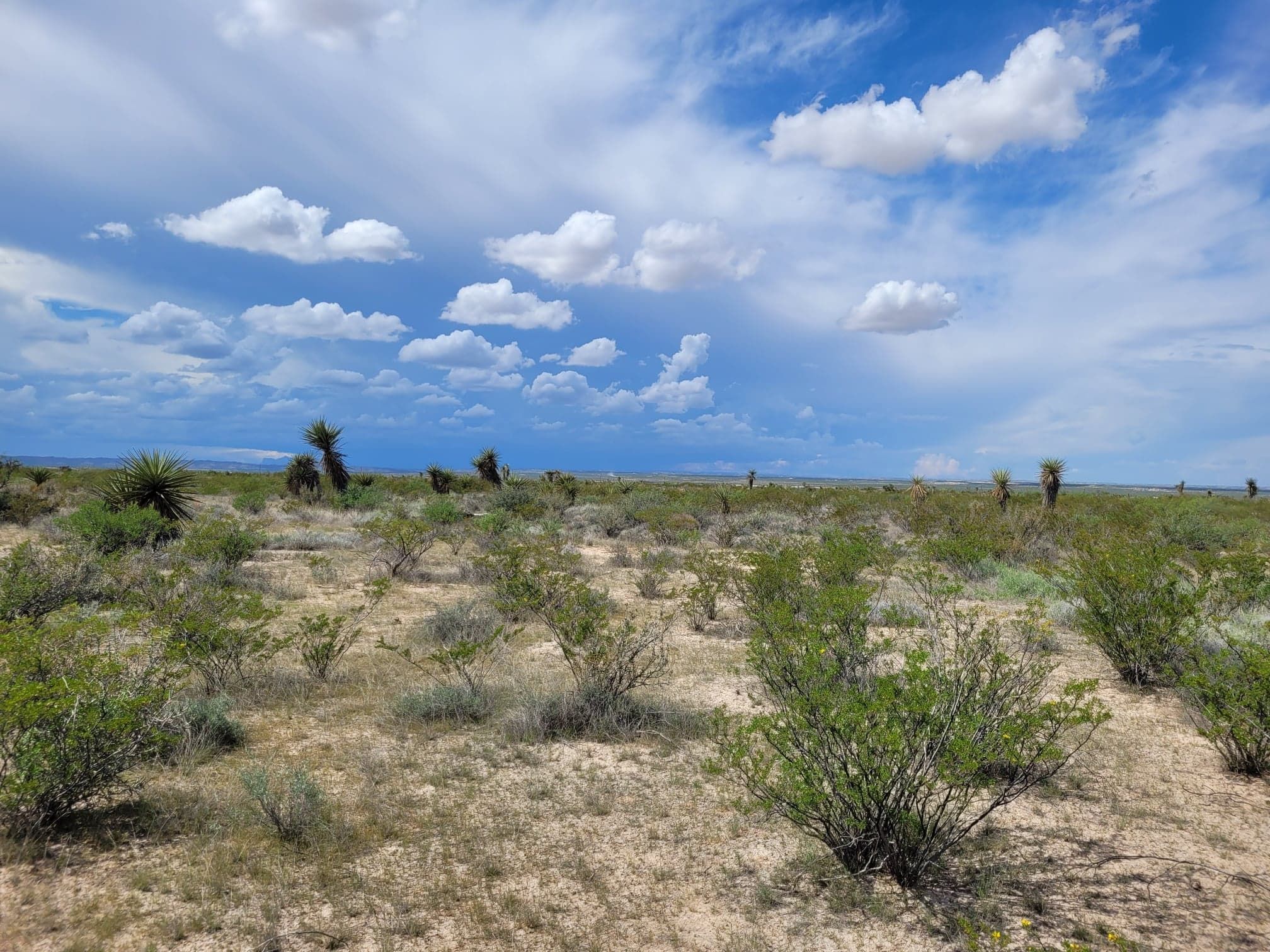
If you want room to spread out, our 10 acres at Salt Creek near Orla, Texas, is a good place to practice finding your corners. It's wide open high desert, there's no HOA and RVs and camping are allowed. It's $12,708 cash, or $648 down, then $201 a month for 60 months. You can pull up the free map at Salt Creek.
If you want the GPS coordinates and directions to go see it, text me at (817) 631-1858.
Jarod
Heads up. I'm not a lawyer, a Realtor, a title agent or a financial advisor. I'm just a guy who buys and sells a lot of land. This post is general information from my own experience, not legal, tax or financial advice. Every state, county and deal is different, so talk to a qualified professional about your situation before you make a decision.
Looking for land?
Most of our properties come with simple owner financing. See what is for sale right now.
See land for sale